

EVEREST EXPEDITION ( 8,848 above sea level )
From
Duration
Tour Type
Overview
Being part of an expedition to Everest, the highest peak on Earth, is every mountaineer’s dream. Chomolungma (Mother Goddess of the World) as they call it in Tibet, Sagarmatha (Goddess of Heaven) in Nepal or Everest (named by British surveyor George Everest in 1856) as we all know it. Not only because of its overwhelming height of 8,848 meters but also because of the whole experience you have to live once you arrive in Nepal.
Included/Exclude
- All transfers
- Double room with breakfast in a 3* hotel
- Welcome dinner in Kathmandu
- Shipping advice
- Transportation by car/van
- The flight to Katmandú - Lukla - Katmandú
- Accommodation and 3 meals per day in lodges with tea/coffee;
- Accredited local trekking guides
- Trekking permit (entrance to the national park);
- Carriers for transporting all equipment
- Comprehensive First Aid Kit;
- Insurance and salaries for all personnel
INCLUDING
The price includes mountaineering and expeditions:- Everything that is mentioned in "trekking".
- Full board accommodation during the ascent.
- Complete camping equipment for BC and high altitude camps.
- Eating tent, kitchen tent, bathroom tent with toilet, table with camping chair;
- Mountaineering permit for Lobuche and Everest.
- High altitude Sherpa with extensive experience, authorized.
- Mountaineering course at base camp;
- Satellite phone - 3 $/minute;
- Food suitable for high altitude.
- A cook and an assistant for the base camp;
- Rates for fixed and dynamic rope.
- A cook and 3 helpers for the base camp;
- One cook and one assistant for the field II.
- 7 oxygen cylinders (4L) for each member.
- 5 oxygen cylinders (4L) for Sherpa.
- Down jacket and down jacket.
- Mask and regulator + reserve.
- Bar and laundry service.
- All fees and paperwork.
- Visa in Nepal, airport taxes.
- International flights, taxes.
- Lunches and dinners in cities not described in the program (except welcome dinner in Kathmandu).
- Single room supplement.
- Mountain medical insurance with helicopter rescue.
- Travel and medical assistance insurance.
- Personal expenses, drinks, bar, tips, laundry, telephone,
- Emergency medical evacuation.
- High altitude Sherpa summit bonuses: minimum $2,000 and $500 for base camp equipment.
- Unforeseen expenses caused by uncontrollable circumstances such as flight cancellations or delays, natural disasters, atmospheric problems, breakdowns, loss or delay of baggage, force majeure, etc.
- Charging of batteries or phone, hot water during trekking.
- Personal equipment for trekking and mountaineering.
- Any service not specified in the previous section "includes".
Tour Plan
The best time for the expedition to Everest is spring, the best month for the ascent being May. You have to be well prepared. Your equipment will be your best ally when you are on the mountain. Take advantage and consult our list of essential equipment for an expedition in Nepal.
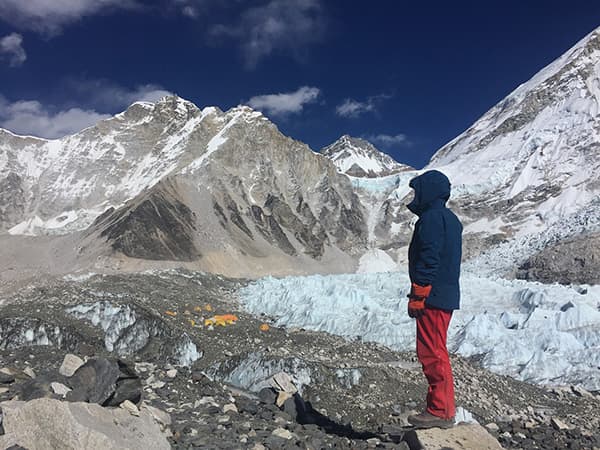
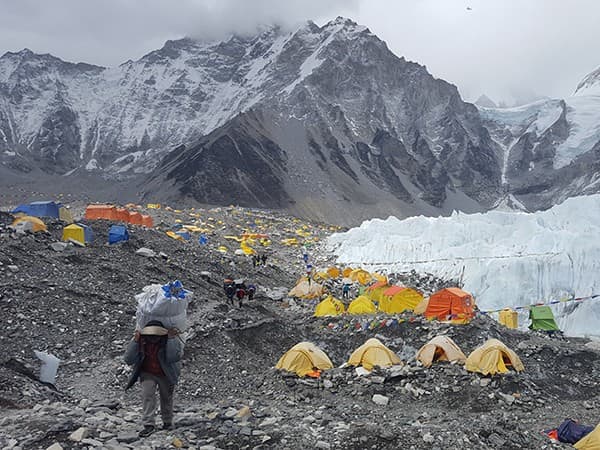
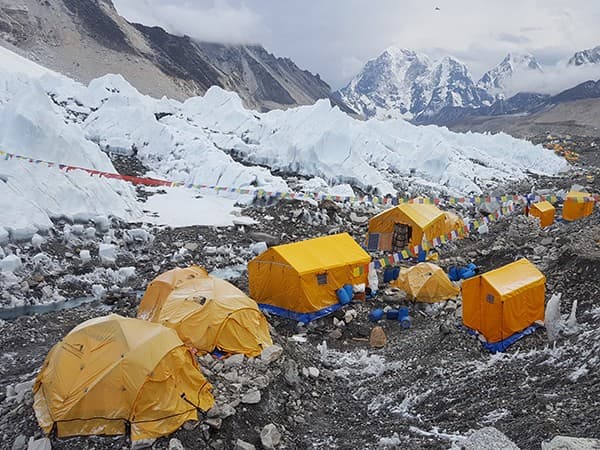
The ascent by the southwest route begins with an approach to the base camp, located at an altitude of 5,380 m, in the southern part of Everest, in Nepal. The base camp is formed every year and stays for about two months (April and May). It is set right at the mouth of the huge Khumbu glacier.
Cracks and unstable ice blocks make the icefall one of the most dangerous sections of the route. To reduce the danger, it is advisable to pass this area at dawn when the sun has not yet melted the ice. On top of the Khumbu Glacier, camp I or advanced base camp (6,065 m approx. altitude) is installed.
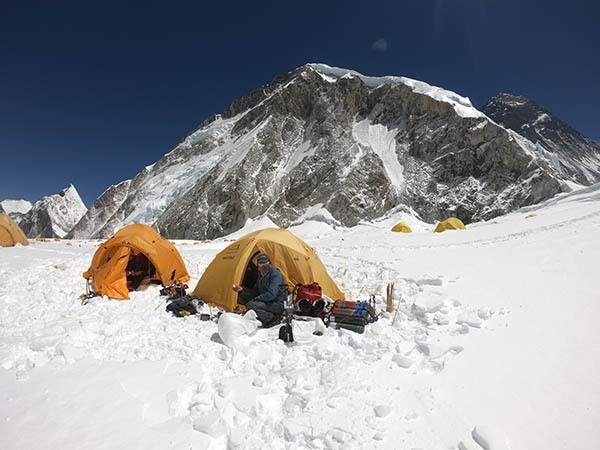
From Camp I it is necessary to cross the Western Cwm (valley in Welsh) to the base of Lhotse, where Camp II is established at 6,500m. Given its topography the Western Cwm protects the area from strong winds and as a result some call it the valley of silence. The ascent of this glacier valley is smooth, continuous and long, often with transverse crevasses to which attention should be paid. Then you cross the glacier to the right until you reach the base of the Nuptse and pass through a corridor known as the "corner of the Nuptse".
From Camp II, you have to climb up the north wall of Lhotse to Camp III, which is located on a plain at 7,470m. Due to the steepness of the wall and the ice this section is equipped with fixed ropes up to Camp III. This camp is the most dangerous of all. Since it is located in the middle of the Lhotse face, it is exposed to strong winds and avalanches.
This part of the ascent can be easy or very hard depending on the weather. If the season is dry and cold, you will encounter hard, blue ice on this section. Keep your crampons sharp just in case. Deep snow makes the ascent easier, but on the other hand increases the risk of avalanches.
From Camp III there is another 500 m of elevation gain to Camp IV on the South Col, at 7,920 m. From pitch III to pitch IV, there are two more challenges to overcome: the Ginebrinos spur and the Yellow Band. Both are rocky sections of the wall, secured by a thick cluster of ropes. Ropes installed along the route help climbers pass over snow-covered rock.
The Yellow Band is an interspersed section of marble, phyllite, and schist that requires about 100 m of rope to traverse. Next, there is a very steep but fortunately not very long area and then you enter the land of the spirits: the death zone. Once arrived at the south col climbers have only two or three days of endurance at this altitude to attempt assaults on the summit.
From camp IV, start the ascent around midnight, with the hope of reaching the summit in 10 to 12 hours. First you have to overcome an ice wall in the final section of the south col, and then start looking for the triangular face that leads to the 8,400 m balcony. Then you continue along the ridge, crossing some large rock steps. In this area there is usually a lot of snow accumulation that makes progress difficult and at the same time increases the risk of avalanches.
At 8,750 m is the South Summit. Then, we continue along the Southeast ridge, known as the "cornice traverse", where the snow covers discontinuous rocks. This is the section where climbers are most exposed, as one false step spells disaster. At the end of this section, at about 8,760 m, there was an imposing 12 m high rock wall called Hillary's step. After the 2015 earthquake it collapsed. What remains is equipped with fixed ropes or ladders.
Once past the old step area, the climb is technically easy to the summit of Mount Everest, the highest point on Earth! Congratulations champion! After so much effort and sacrifice you have to leave the "Top of the World" in less than half an hour, as it is necessary to descend to Camp IV before nightfall, or before the supplementary oxygen runs out. The return is made by the same route.
Pick up at Kathmandu international airport and transfer to the hotel. Rest of the day free to explore the city (Thamel area).
Day to prepare trekking/climbing equipment and final details of the itinerary, permits. Welcome dinner. Overnight at the hotel.
Early in the morning, almost at dawn, we transfer to the local airport in Kathmandu/Ramechapp for a 25 minute flight to Lukla (2,840 m). Lukla is a beautiful Sherpa town and also the gateway to the Everest region. The views of the Himalayan range during the flight are breathtaking. Landing on the narrow and short runway at Lukla airport is also a unique experience. After breakfast in Lukla we start trekking through beautiful scenery to Phakding. On this day we will also meet the local team that will accompany us all the way. Overnight at lodge.
Today we have a long day of about 6-7 hours of walking to the village of Namche Bazaar, capital of the Khumbu Valley. The trail is comfortable, crossing multiple Sherpa villages, to the entrance of Sagarmatha National Park, (Everest), where we will check in with our passport. Then we follow the river bank and climb through a pine forest, we cross the river Dudh Kosi by a large suspension bridge.
From here we have a steep zigzag climb, so it is very important to climb at a leisurely pace, to facilitate our acclimatization. In one of the curves of this climb if the weather permits we can see Mount Everest. In the afternoon we arrive at Namche Bazaar, the capital of the Sherpa people. We will spend the night in a hostel, which will help us to acclimatize favorably.
In the optional morning we can hike for about 4 - 5 hours, which will serve us for acclimatization and from where we can enjoy magnificent views of Everest. We can also visit the Sherpa culture museum, Sherwi Khangba or hike to Khundi Hospital, the first hospital built in the Khumbu region by Sir Edmund Hillary and the Himalayan Trust in 1966. Afternoon free to wander around and visit the Tibetan markets. Overnight at Namche Bazaar lodge.
We leave behind the steep streets of Namche Bazaar to continue only surrounded by huge mountains such as Kangtega (6,782 m), Thamserku (6,618 m), Ama Dablam (6,856 m). The Ama Dablam is one of the most beautiful mountains in the world that will accompany us almost to the village of Tengboche. Tengboche is a magical, beautiful place that invites peace and meditation and is famous for the Buddhist Monastery, where you can attend the Puja, and for the views of Everest. Overnight in lodge.
We start the day in the morning as usual because we have about 6 hours of hiking to Dingboche. At first we descend on a narrow path through a forest of conifers and rhododendrons to an area from where we have a close view of the imposing Ama Dablam. Then the trail continues to climb to the height of Pangboche village. After a few more hours we reach our destination where we will spend the night in a lodge.
Acclimatization day in which we can rest or enjoy the scenery that gives us the environment. We can also hike for 5-6 hours to Chukhung village (4,730m) or to Nangkartshang peak at 5,000m for better acclimatization. From here we have stunning views of Ama Dablam (6,812m), Cholatse (6,441m). Overnight at the lodge in Dingboche.
We continue our route from the valley of Dingboche in ascending direction. Soon we reach a viewpoint from where we have panoramic views of the Tawachee (6,495m) and Cholatse (6,440m). After lunch at the teahouse in Dugla (4,620m) we continue with a steep ascent to the final mouth of the Khumbu glacier, which comes from Everest. After walking 5-6 hours we reach Lobuche base camp (4,930m), where we may well feel the effects of the altitude gain. We spend the night in tents.
After breakfast we start the mountaineering course where the guide teaches us how to use the fixed ropes and how to move on the snow/ice. Overnight at Lobuche base camp. Overnight in tents.
Acclimatization day. After breakfast we climb up to 5,300 m and then descend and spend the night at base camp. Night in tents.
We climb up to the high camp overcoming about 500 m of elevation gain. The path to the high camp is steep and rocky, but it offers beautiful views of the Khumbu glacier. After about 3 to 4 hours of walking we reach the high camp. We camp, have lunch and start the mountaineering course where the guide teaches us again how to use the fixed ropes and how to move on the snow/ice. We go to sleep early because that same night we climb to the summit. Overnight in tent at the high camp.
Today is the day of the ascent to Lobuche Peak. We pass through glacial areas until we reach the area of the fixed ropes that our Sherpas will have previously installed. Once we reach Lobuche peak, we enjoy magnificent panoramic views of Everest, Lhotse, Nuptse, Ama Dablam, Cholatse, Pumori and many more. We spent the night at the summit in tents.
After breakfast we return to base camp by the same route. Overnight in tents.
Rest day at the camp. Overnight in tents.
The road to Gorak Shep (5,160 m) is steep and somewhat hard but the views are breathtaking. Gradually we begin to enjoy splendid views of the most emblematic peaks of the Himalayas among which: the peak of Pumori (7,145m) Nuptse (7,864 m), Kala Pattar (5,545m), Lhotse (8,516 m) and Mount Everest. Looking to our right we can see the huge Khumbu glacier that marks its evolution along the slopes of Everest. Overnight in lodge.
The road to the base camp goes along the right side of the Khumbu Glacier. Looking to our right we can see the huge Khumbu glacier that marks its evolution down the slopes of Everest. After about 3-4 hours of walking, we arrive at the base camp of the highest mountain in the world, where we will meet the expedition team. Overnight in tents.
Time for acclimatization, portages, equipment and assembly of the successive encampments before the attack to the summit of Everest.
Day of celebration and rest at base camp. Night in tents.
After breakfast we continue with the descent to the village of Pheriche (4.240m), where we will spend the night. Overnight in lodge.
We start the day with a descent through the Imja Khola valley, passing through the village of Dingboche. Then we reach Pangboche, where the oldest monastery in the Khumbu region, Gompa Pangboche, is located. Almost all the way the statue of the impressive Ama Dablam watches us closely. We continue downhill and after about 4-5 hours of hiking we reach today's goal, Tengboche. We spend the night at the lodge.
We continue the comfortable descent through the Khumbu valley to where we cross the river to climb back up to Namche Bazaar. Again we have great views of Everest, Lhotse and Nuptse. Overnight in lodge in Namche Bazaar.
We leave early and in about 7.8 hours of walking we arrive in Lukla and finish the circuit. Free afternoon to get to know the town and enjoy some of the bars to celebrate once again the ascent to the highest peak on Earth. Overnight in a hostel in Lukla.
Today we say goodbye to the Khumbu Valley. We take our light aircraft that takes us back to Kathmandu. Arrival at Tribhuvan airport, transfer to the hotel. Afternoon free to stroll around Thamel, where we find all kinds of good restaurants and endless streets full of stores. Overnight at the hotel.
After breakfast we go sightseeing in the capital of Nepal. In the evening we prepare for the farewell dinner in a traditional Nepalese restaurant. Overnight at the hotel.
After breakfast at the hotel, departure to the airport or connection to another tour.
Location
Find a route from your location
Related Tours
- Quality4
- Location3.67
- Amenities2.67
- Services4.33
- Price4.67
Cultural Trip To Nepal And Tibet
Review Scores
3 thoughts on “EVEREST EXPEDITION ( 8,848 above sea level )”
Leave a Reply to admin Cancel reply
Booking Tour
Tour Information
Max Guests
Min Age
Tour Location
Languages Support
Last Minute Deals
- Quality3.67
- Location4.67
- Amenities4.67
- Services4.67
- Price3.33
Full Day Paracas and Huacachina
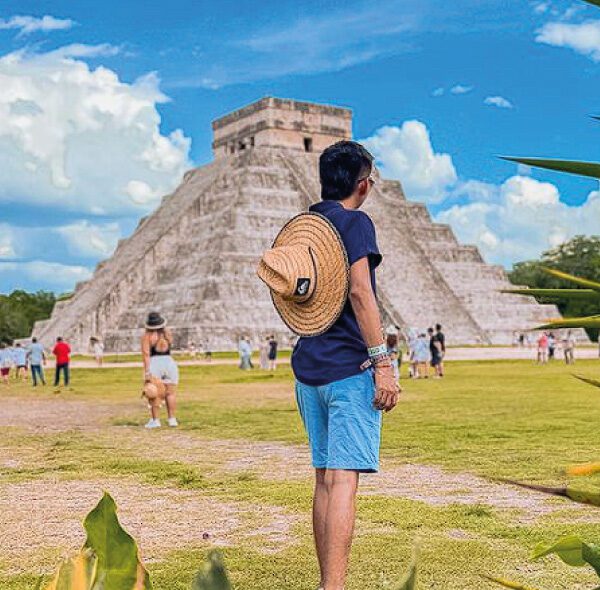
- Quality4
- Location3.67
- Amenities3.33
- Services4.67
- Price3.33
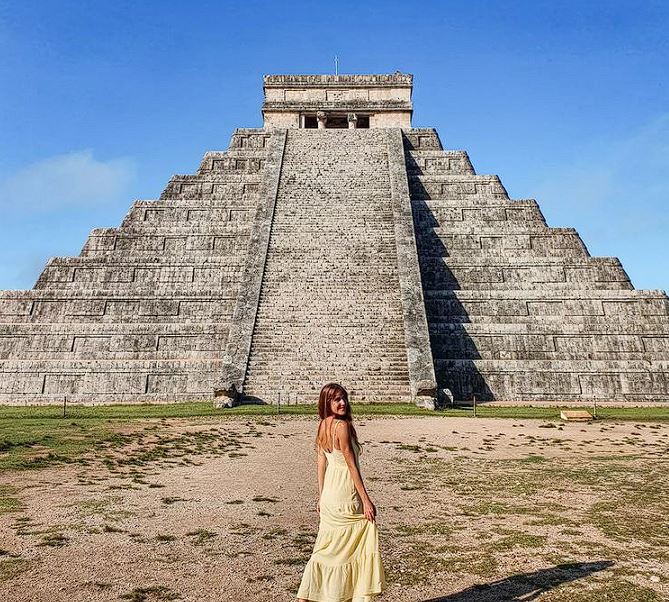
Tour to Chichén Itzá and sacred cenote
- Quality3.33
- Location4
- Amenities3.67
- Services3
- Price4
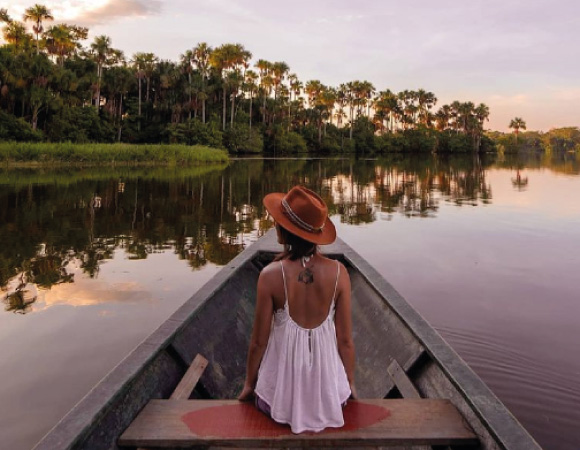
Tambopata jungle tour 4 days 3 nights
Mexico
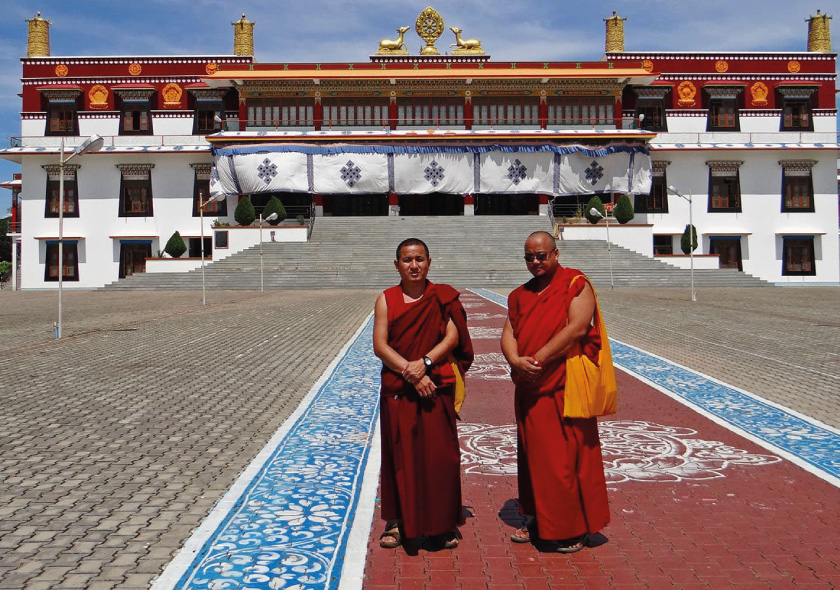
Nepal
3.8
It is a great place to shop not too far from New York. We took the bus from Port Authority and traveled through the countryside to get there.
3.6
We always stay at here when in town. The location is great, staff is wonderful and we love the overall feel. Beautiful view from the here.
4.6
This is the best tour on the east coast! It was amazing how many places we visited and what great memories we made!